Academic Record by Term
11 terms · 174 credit hours attempted| Code | Title | Grade | Credits |
|---|---|---|---|
| PSYC 1100 | Intro to Psyc: Basic Processes | A | 3 |
| PSYC 1200 | Intro to Psyc: Areas & Applications | B+ | 3 |
| PSYC 2320 | Developmental Psyc: Childhood | C− | 3 |
| PSYC 2322 | Developmental Psyc: Adulthood | A | 3 |
| PSYC 2XXX | Unassigned – Second Year | A | 3 |
| PSYC 2XXX | Unassigned – Second Year | A | 3 |
| PSYC 2XXX | Unassigned – Second Year | A+ | 3 |
| Code | Title | Grade | Credits |
|---|---|---|---|
| ENGL 1202 | Read & Write Select. Topics | C | 3 |
| LANC 1200 | Contemporary Japanese Society | A+ | 3 |
| PHIL 1100 | Introduction to Philosophy | A− | 3 |
| Code | Title | Grade | Credits |
|---|---|---|---|
| ANTH 1200 | Biological Anthropology | A− | 3 |
ANTH 1200 — Biological AnthropologyKen Andrews · Summer 2022 · Online / Asynchronous · KPU Surrey Course Description
A survey of human origins covering hominid evolution, the fossil record, non-human primates, and modern human biological variation. The course traces how evolutionary forces — natural selection, genetics, and environmental pressures — have shaped human bodies and behaviour over millions of years, situating Darwin's theories within contemporary evolutionary synthesis. Topics Covered
|
|||
| ENGL 1100 | Intro to University Writing | A | 3 |
ENGL 1100 — Course WorkSummer 2022 · Dr. Steven Weber · 2 submissions Essay 1
Exploring the Characteristics of King's Tone on Justice, Civil Disobedience and Religion in the "Letter from Birmingham Jail"
Ajit Kumar, Sunaina · ENGL 1100 S20 · July 10, 2022
A rhetorical analysis of Martin Luther King Jr.'s 1963 "Letter from Birmingham Jail," arguing that King's strategic use of tone — balancing strength, quiet caution, and impatience — deepens the reader's understanding of civil disobedience as a dignified and nonviolent form of protest. The paper traces how King's persona projects impatience tempered by reverence, drawing on biblical allusions (Paul, Jesus, Amos) and historical precedents to reframe civil disobedience not as lawlessness but as a morally necessary act. The analysis concludes that King's measured tone, even from a jail cell, constitutes the essay's most persuasive rhetorical achievement. SueAjitKumar.Engl1100.FirstEssayKing.pdfEssay 2
Similarities and Differences in Swift and Du Bois Through Satire for Social and Moral Change
Ajit Kumar, Sunaina · ENGL 1100 S20 · August 16, 2022
A comparative analysis of Jonathan Swift's "A Modest Proposal" (1729) and W.E.B. Du Bois' "A Mild Suggestion" (1912), arguing that both satirists deploy grotesque imagery and calm, restrained prose to expose the moral failures of their respective societies — Irish poverty and American racism — while covertly pointing toward real solutions. The paper examines structural and stylistic differences (top-down vs. bottom-up, ongoing vs. overnight, bureaucratic vs. narrative) to argue that Swift's greater length and outlandish specificity give his satire a clearer line between fiction and reality, ultimately positioning him above Du Bois in satirical execution while affirming both writers' shared commitment to social and moral development. SueAjitKumar.Engl1100.Essay2.pdf |
|||
| PSYC 2330 | Social Psychology | A− | 3 |
PSYC 2330 — Social PsychologyD. O. Adebayo, PhD · Summer 2022 · Blended (In-person & Online) · KPU Surrey, Thu 10:00–12:50 Course Description
An introduction to social psychology — the science of how people's thoughts, feelings, and behaviours are influenced by others. Topics include research methods, social perception, social cognition, the self, attitudes, persuasion, group dynamics, and social influence, with applications to work, health, law, and the environment. Topics Covered
|
|||
PSYC 2330 — Course WorkSummer 2022 · 2 submissions Group Assignment
Journal Article Review — "The Effects of Social Norms on Parents' Reading Behaviour at Home with Their Child"
Ajit Kumar, S., Dhinjal, M., Dosanjh, P., Goraya, A., Kapoor, P. · Group 1 · Summer 2022
A group critique of Colgate & Ginns (2016), a quasi-experimental study examining how descriptive social norms — communicated via notes sent home — increased parental reading involvement. The review identifies the false uniqueness effect in parents' unawareness of being influenced, affirms the suitability of the quasi-experimental method, and notes the study's focus on social pressure over direct parent–child relationships. The group concludes that while the article effectively demonstrates social norm influence on parental behaviour, it underweights financial and cultural factors. SunainaAjitKumar.Psyc2330.Group1.Script.pdfIndividual Paper
An Analysis of the Persuasion by Uber Eats
Ajit Kumar, Sunaina · PSYC 2330 S10 · July 16, 2022
A rhetorical analysis of Uber Eats' 2022 ad campaign featuring celebrities eating inedible items. The paper argues the campaign operates primarily through the peripheral/heuristic route to persuasion — relying on celebrity appeal, mere exposure, and cognitive dissonance rather than substantive product claims. Drawing on Cialdini's principles, it identifies the liking heuristic as the campaign's core mechanism and critiques its failure to address post-pandemic audience psychology, proposing a redesign centred on community, utility, and realistic scenarios. SunainaAjitKumar.Psyc2330.SocialIndividualPaper.pdf |
|||
| PSYC 2375 | Perception | A | 3 |
PSYC 2375 — Course WorkSummer 2022 · Dr. Farhad Dastur · 2 submissions Perception Demo — Written Summary
Proprioception vs the EMS Machine
Ajit Kumar, Sunaina & Cullimore, Mckesey · PSYC 2375 S10 · July 6, 2022
A written report accompanying an in-class perception demonstration exploring proprioception — the sense of self-movement and body position — and how it can be externally overridden by electrical muscle stimulation (EMS). The paper covers the neuroanatomy of the three proprioceptors (Golgi tendon organs, joint receptors, and muscle spindles), the conditions that degrade proprioceptive function (diabetes, injury, age), and the mechanics of EMS machines, which bypass the spinal cord and brain to directly stimulate muscles via timed electrical impulses above 100mV. The demonstration drew on Ramachandran's phantom limb research to situate EMS within the broader question of what perception can and cannot tell us about bodily control. SunainaAjitKumar.Psyc2375.PerceptionDemoSummary.pdfPerception Demo — Slides
Proprioception vs the EMS Machine — Presentation Slides
Ajit Kumar, Sunaina & Cullimore, Mckesey · PSYC 2375 S10 · July 6, 2022
The accompanying slide deck for the in-class demonstration, covering the perceptual process from sensory stimulus through transduction, attention filtration, and brain interpretation; the structure and function of the three proprioceptors; causes of proprioceptive deterioration; and the EMS machine's mechanism of involuntary muscle contraction. SunainaAjitKumar.Psyc2375.PerceptionDemoSlides.pdf |
|||
PSYC 2375 — PerceptionDr. Farhad Dastur · Summer 2022 · In-Person, Wed 1:00–4:00pm · KPU Surrey Main 2840 Course Description
An exploration of the science of perception across all senses — how the brain transforms raw sensory data into experience. The course investigates visual illusions, perceptual disorders, signal detection theory, synesthesia, virtual and augmented reality, auditory perception, and the chemical senses, encouraging critical thinking about what our senses can and cannot tell us about reality. Topics Covered
|
|||
| PSYC 2385 | Cognition | A− | 3 |
PSYC 2385 — Course WorkSummer 2022 · Dr. Levente L. Orbán · 1 submission Term Paper
Cognitive Deficits Caused by Trigeminal Pain Stimulus
Ajit Kumar, Sunaina · PSYC 2385: Cognition · June 29, 2022
A literature review examining how trigeminal pain — classified among the most debilitating pain stimuli by the IASP and IHS — disrupts cognitive processes including selective attention and memory. The paper surveys the neuroanatomy of the trigeminal nerve and its relationship to the chemical senses of taste and smell, then traces three categories of pain–cognition interaction: sweet-taste analgesia (where dopamine and serotonin effects demonstrably reduce pain perception in adults, confirmed via fMRI); attentional modulation of pain (where high cognitive load reduces pain perception, and conversely where intense trigeminal stimulation commandeers selective attention); and chronic trigeminal neuralgia (TN), which produces measurable grey matter volume reduction in the anterior cingulate cortex correlated with disease duration (r = −0.47). The paper calls for further research into whether the structural changes caused by chronic TN are reversible, and situates its findings within the Institute of Medicine's broader push toward precision pain medicine. SunainaAjitKumar.Psyc2385.termpaper.pdf |
|||
| Code | Title | Grade | Credits |
|---|---|---|---|
| ENGL 3313 | Studies in Major Writers | B | 3 |
ENGL 3313 — Course WorkFall 2022 · Dr. Joakim Nilsson · 2 submissions Midterm Paper — Literary Analysis
Literary Analysis: Baldwin's "Previous Condition"
Ajit Kumar, Sunaina · ENGL 3313 · November 5, 2022
A close reading of the opening passage of James Baldwin's "Previous Condition," arguing that Peter's self-description — listing his Blackness alongside physical shortcomings as reasons for his unemployability — functions as Baldwin's deliberate rhetorical strategy to position white readers into an awareness of their own racial privilege. The analysis traces how Peter's depression and self-loathing are layered and distinct: his inability to seek work is not laziness but the psychic cost of having debased himself by playing "a kind of intellectual Uncle Tom." The paper concludes that Baldwin, despite writing from Black experience, pitches his argument at a white audience, and that Peter's stubborn insistence on acting — even while broke and mooching off friends — reveals a resilience that quietly counters the portrait of defeat. SunainaAjitKumar.Engl3313.MidtermPaper.pdfComparative Essay
Women in Black Boy vs Go Tell It on the Mountain
Ajit Kumar, Sunaina · ENGL 3313 · December 15, 2022
A comparative analysis of the female characters in Richard Wright's Black Boy and James Baldwin's Go Tell It on the Mountain, arguing that Wright's women are fundamentally archetypal — helpers, antagonists, and prizes in a traditional male hero's journey (via Campbell and Pratchett's maiden/mother/crone framework) — while Baldwin's are fully realized characters with their own narrative chapters, interiority, and agency. The essay traces this difference through mothers (Ella vs. Elizabeth), aunts and grandmothers (Addie and grandmother vs. Florence), and minor female figures, concluding that Baldwin's inclusion of women's points of view enables a feminist reading of Go Tell It on the Mountain that Black Boy forecloses. Richard Wright's mother Ella is named only once in the entire novel; Elizabeth has her own chapter. SunainaAjitKumar.Engl3313.ComparativeEssay.pdf |
|||
ENGL 3313 — Studies in Major Writers: The Art and Activism of Richard Wright and James BaldwinDr. Joakim Nilsson · Fall 2022 · Online · KPU Course Description
A focused study of two foundational African American writers — Richard Wright and James Baldwin — who used strikingly different styles to articulate the causes and effects of racism and its impact on Black Americans. The course explores the roles of religion, geography, exile in Europe, and literary influence in shaping their art and activism, with primary texts including Black Boy, Go Tell It on the Mountain, and Notes of a Native Son. Topics Covered
|
|||
| FINA 1130 | Ceramics I | B+ | 3 |
FINA 1130 — Course WorkFall 2022 · Ceramics I · 3 pieces Hand-Building — Pinch Pots
Finished Pinch Pot Sculptures
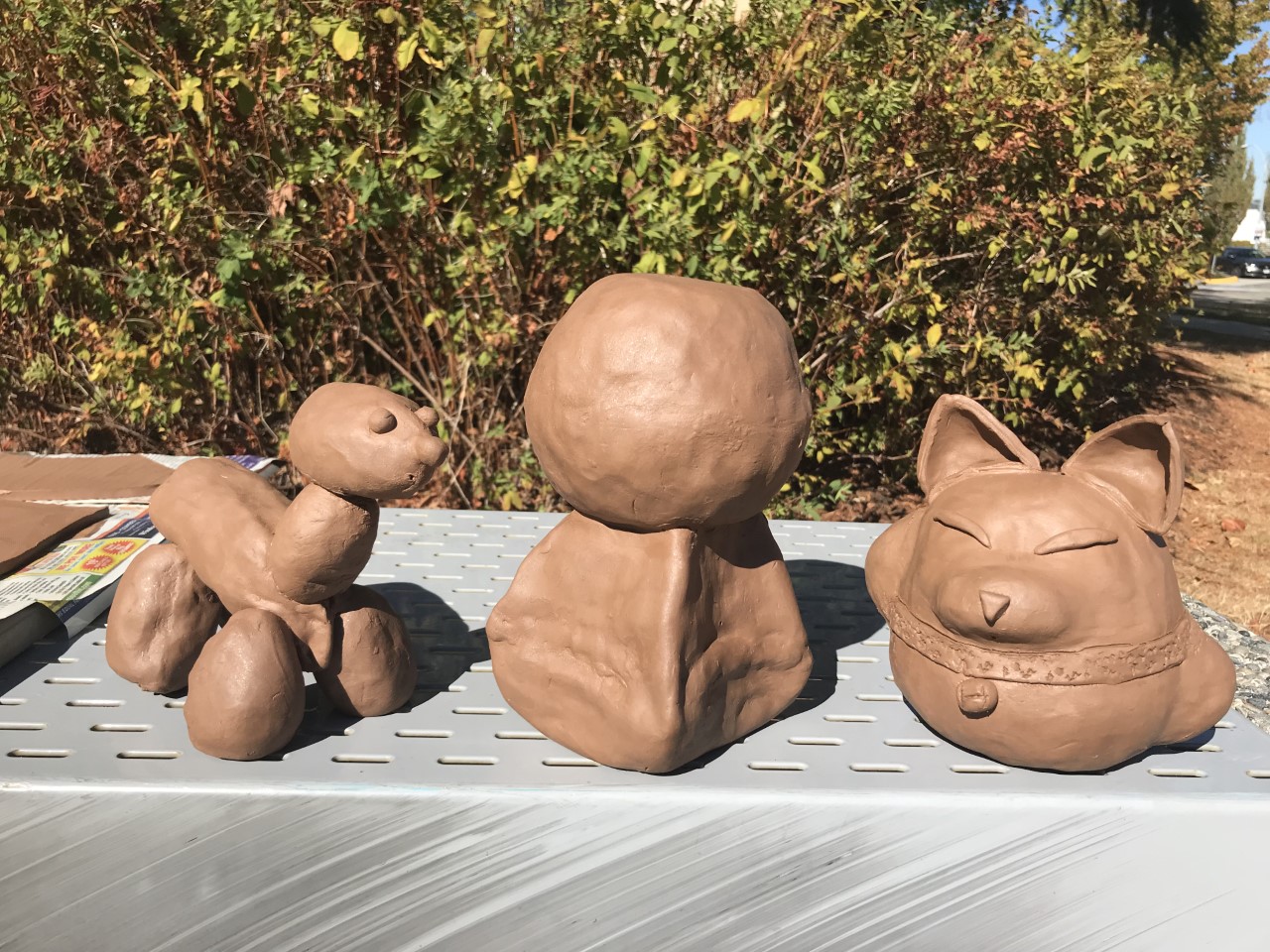
Slab Work — Texture Tile
Texture Tile — Pineapple Form
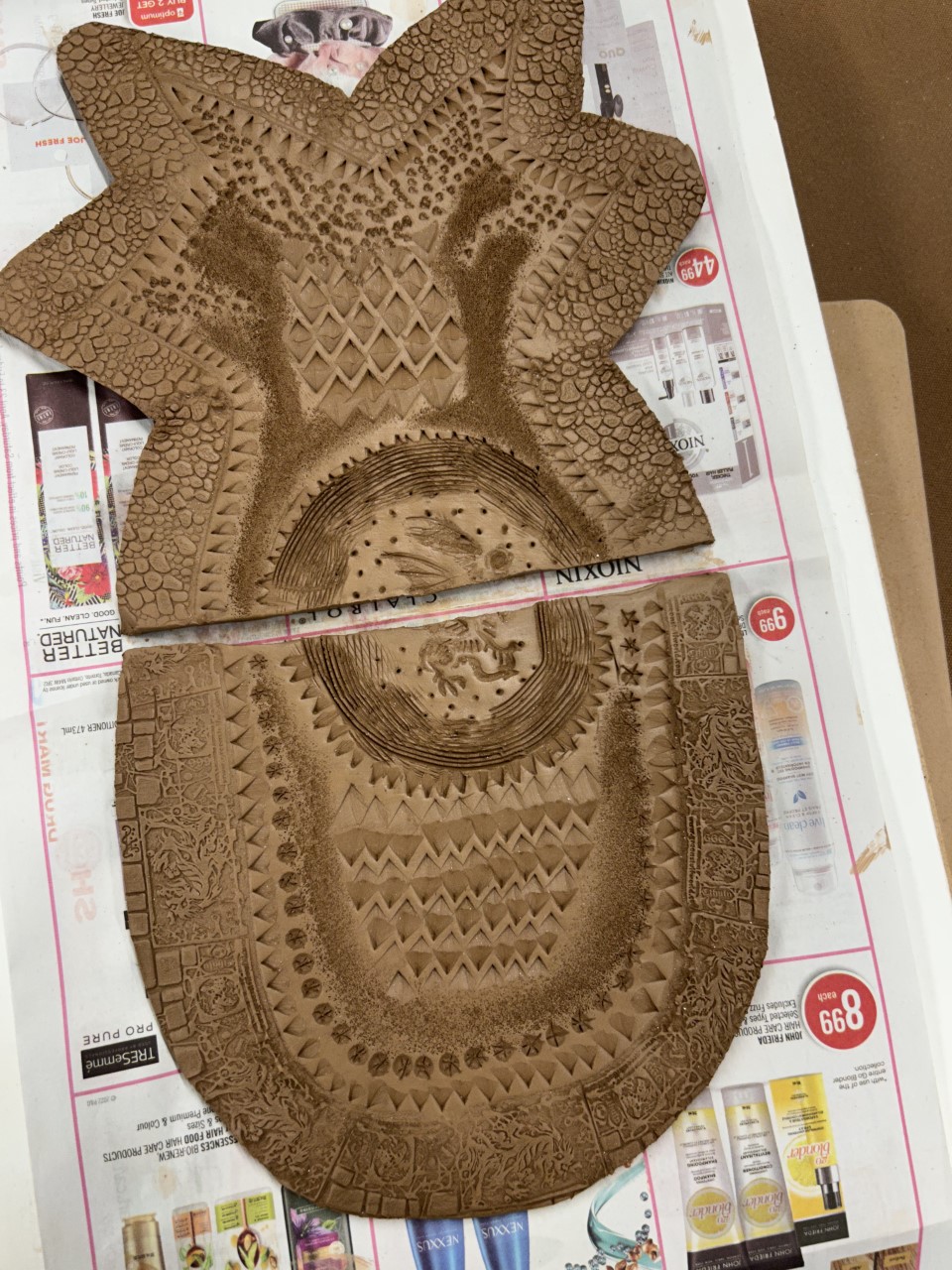
Slab Work — Texture Tile
Texture Tile — Oval Form
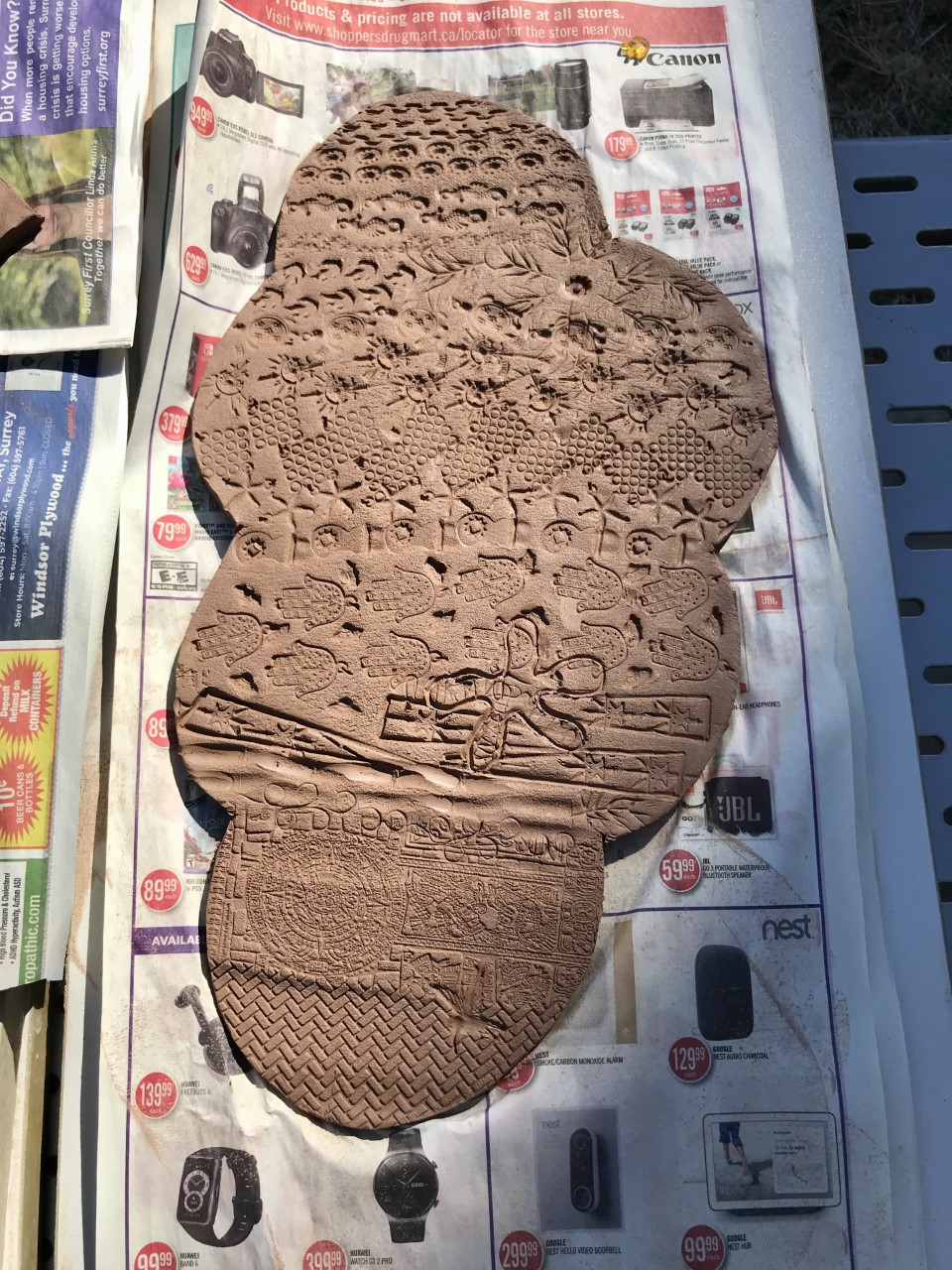
|
|||
| PSYC 2300 | Applied Statistics | A+ | 3 |
PSYC 2300 — Applied StatisticsDr. Richard Le Grand · Fall 2022 · Online / Asynchronous · KPU Course Description
An introduction to statistical tools used in the behavioural sciences for describing and interpreting research results. Topics include probability theory, significance testing, correlational and regression methods, and the application of these techniques to psychological data. Delivered asynchronously via weekly video lectures and MindTap activities. Topics Covered
|
|||
| PSYC 2315 | Brain and Behaviour | A | 3 |
PSYC 2315 — Brain and BehaviourDr. Jay Hosking · Fall 2022 · Online / Asynchronous · KPU Course Description
A bridge between psychology and neuroscience, linking behavioural knowledge to its neurobiological foundations. Starting from the neuron as the fundamental unit of the nervous system, the course builds outward through neural communication, neuroanatomy, sensory and motor systems, the endocrine system, and neuroscience research methods — exploring how small biological changes can radically alter behaviour and experience. Topics Covered
|
|||
| PSYC 2400 | Research Methods in Psychology I | A− | 3 |
PSYC 2400 — Course WorkFall 2022 · Dr. Shayna Minosky · Team Et al. · 3 submissions Research Project — Part 1
Draft Research Question: Does the Use of Colloquialisms Impact the Perception of Intelligence?
Team Et al. · PSYC 2400 · Fall 2022
The team's initial research question and design proposal for a between-groups experiment investigating whether the presence of colloquialisms in a presentation affects listeners' perception of the presenter's intelligence. The proposal outlines the independent variable (formal vs. colloquial language), the dependent variable (perceived intelligence via a semantic differential scale), and the experimental method: participants aged 18–30 at KPU would watch a 3-minute video and complete a 7-item questionnaire rating the presenter on intelligence, approachability, and ease of follow. Grounded in Spencer et al. (2013) on language and social class, the hypothesis predicts that colloquial presenters will be rated as less intelligent. SunainaAjitKumar.Psyc2400.ResearchQs.pdfResearch Project — Literature Review
Language and Perceived Intelligence: Literature Review
Team Et al. · PSYC 2400 · October 24, 2022
A review of existing research on the relationship between slang use and perceived intelligence. Drawing on Language Expectancy Theory and Social Information Processing Theory, the review synthesises findings on how slang violates language expectations and triggers negative impressions of the speaker's cognitive ability and professionalism (Van der Zanden et al., 2019; Murphy, 2007). It also surfaces a counterintuitive finding: colloquial, conversational speech can increase audience engagement and learning performance (Schneider et al., 2015), suggesting the relationship is context-dependent. The review identifies a gap in the literature — no prior study directly tested the slang–intelligence perception link in a controlled experimental setting — and frames the team's own study as an attempt to address it. SunainaAjitKumar.Psyc2400.LitReview.pdfResearch Project — Proposal
Slang and Its Effects on Perceived Intelligence: Research Proposal
Team Et al. · PSYC 2400 · Fall 2022
The full research proposal for a between-groups experiment conducted via SONA and Qualtrics. Fifty participants were randomly assigned to hear one of two 3-minute audio recordings on fast fashion — one delivered in formal language (control) and one modified to include colloquialisms (experimental) — then rated the speaker on a 5-item semantic differential scale covering intelligence, presentation quality, clarity, interest, and distraction. Data were to be analysed using an independent samples t-test, with the interval-scale DV (perceived intelligence composite) compared across the two nominal-scale groups. The proposal includes the full audio scripts, informed consent procedures, SONA recruitment strategy, anonymity and confidentiality protocols, and a minimal-risk checklist confirming ethical compliance. SunainaAjitKumar.Psyc2400.Proposal.pdf |
|||
PSYC 2400 — Experimental Psychology: Research MethodologyShayna Minosky, PhD · Fall 2022 · In-Person, Wed 4:00–6:45pm · KPU Surrey Main 2810 Course Description
An introduction to the scientific method as applied to psychological research. Students examine quantitative methods including descriptive research, experimental design, and correlations, alongside qualitative approaches. Delivered in a Team-Based Learning (TBL) format, the course moves through three phases — preparation, readiness assurance tests, and application — culminating in a collaborative experimental research project designed, conducted, analyzed, and presented by student teams. Topics Covered
|
|||
| Code | Title | Grade | Credits |
|---|---|---|---|
| ASIA 3320 | Japanese Culture Through Film | A− | 3 |
ASIA 3320 — Course WorkSpring 2023 · Prof. Justin Stein · 1 submission Film Essay
Fashion, Subculture, and Identity in Kamikaze Girls
Ajit Kumar, Sunaina · ASIA 3320 S50 · April 18, 2023
An essay situating Nakashima Tetsuya's Kamikaze Girls (2004) within a long history of clothing as tribal identity in Japan — from the sumptuary laws and iki aesthetics of the Edo period, through the Meiji-era adoption of Western dress, to the youth subcultures of the late twentieth century. The essay argues that fashion in the film — Momoko's Rococo Lolita style and Ichigo's Yanki/Yakuza aesthetic — functions as both a philosophical declaration and a coping mechanism, while comparing the film to Nana (2005) and Helter Skelter (2012) to consider whether cross-subculture friendship is a natural phenomenon or a cinematic plot device, and whether outward group belonging is merely a veneer over an underlying shared Japanese identity. SunainaAjitKumar.ASIA3320.KamikazeGirls.pdf |
|||
ASIA / LANC 3320 — Japanese Culture Through FilmProf. Justin Stein · Spring 2023 · In-Person, Tue 7:00–9:50pm · KPU Surrey Main 2830 Course Description
An examination of post-war Japanese cinema as a lens into Japanese culture, covering family, gender, sexuality, technology, religion, capitalism, and modernity. Each week pairs a film with academic readings to generate critical reflection and discussion. All readings are provided free through Moodle (Zero Textbook Cost). Topics Covered
|
|||
| CRWR 1100 | Intro. to Creative Writing I | A | 3 |
CRWR 1100 — Course WorkSpring 2023 · Renee Sarojini Saklikar · 4 submissions Microfiction
Proper
Ajit Kumar, Sunaina · CRWR 1100 S11 · Spring 2023
A 250-word piece of flash fiction following a young woman's anxious morning ritual of choosing what to wear before leaving the house — narrating her internal spiral of self-monitoring (too short, too loud, too slutty) against the imagined judgement of her mother. The story ends with the mother's simple, warm "you look nice," leaving the daughter's exhausting performance of propriety quietly unwitnessed and unrewarded — except perhaps by herself. AjitKumar.Sunaina.CRWR1100s11.Microfiction.pdfShort Story
Stuff n' Things
Ajit Kumar, Sue · CRWR 1100 S11 · March 8, 2023
A short story narrating the beginning of a romance between a South Asian woman newly arrived in Canada and an older man she meets on the Millennium Line SkyTrain while reading Lovecraft. The story moves from their first meeting through a first date at a pool, dinner at White Spot, and a night at his home — a room so thoroughly buried in salvaged technology and battery boxes that it constitutes its own character. The second half follows their week-long project of clearing out the room together, ending with him introducing her to his father as "my girlfriend" with a look that says he intends to marry her. AjitKumar.Sue.ShortStory.StuffNThings.CRWR1100S11.pdfPoetry — First Drafts
Sleepy Time Tea & Other Poems (Draft Portfolio)
Ajit Kumar, Sunaina · CRWR 1100 S11 · Spring 2023
A first-draft poetry portfolio including six poems: "Sleepy Time Tea" (on the vividness of dream life versus waking reality); "Canned" (a meditation on sardines, factory life, and broccoli); "What's in a Name" (on identity, names, and the desire to be asked); "Some Rules to Abide By" (an aphoristic life-advice poem); a panic-and-happy-place piece; and "Quilt" (a narrative poem about a woman whose quilt becomes evidence in her disappearance). AjitKumar.Sunaina.CRWR1100s11.Poem.pdfPoetry — Revised Portfolio
Poetry Portfolio & Short Statement of Revision
Ajit Kumar, Sunaina · CRWR 1100 S11 · Spring 2023
The revised final portfolio of three poems — "What's in a Name," "Quilt," and "Some Rules to Abide By" — alongside a short statement of revision describing her process: first drafts written as stream-of-consciousness without punctuation or capitalization, revised after peer and instructor feedback to add specific scenes, sense-based imagery, and structural clarity while preserving her distinctive voice. "Quilt" gained new closing lines about the beauty of the stitch going unwitnessed; "Some Rules to Abide By" incorporated the real-life scene of coaxing a bee onto a piece of paper in a clinic doorway. AjitKumar.Sunaina.CRWR1100s11.Poem2.pdf |
|||
| JAPN 1100 | Basic Japanese I | A+ | 3 |
JAPN 1100 — Japanese Language IKimiko Brucks · Spring 2023 · Synchronous Online, Mon 1:00–3:50pm · KPU via Zoom Course Description
An introduction to modern standard Japanese for students with little or no prior knowledge of the language. The course covers the two syllabaries (hiragana and katakana) and approximately 50 kanji, alongside basic grammar, vocabulary, and conversational skills appropriate to the Japanese cultural context, with an emphasis on all four skills: speaking, listening, reading, and writing. Topics Covered
|
|||
| PSYC 3215 | Psychology of Memory | A− | 3 |
PSYC 3215 — Course WorkSpring 2023 · Professor Bertrand Sager · 1 submission Term Paper
An Overview of the Forward Testing Effect and Its Interactions with Release from Proactive Interference
Ajit Kumar, Sunaina · PSYC 3215 S11 · April 4, 2023
A literature review examining the relationship between the Forward Testing Effect (FTE) — the finding that interim testing on previously learned material improves encoding of new material — and release from Proactive Interference (PI), the tendency of prior learning to block new learning. The paper surveys a body of research spanning Tulving & Watkins (1974) through Ahn & Chan (2022), ultimately concluding that FTE and release from PI are correlated but not causally linked: FTE occurs even in low-PI conditions, meaning interpolated testing improves new learning through other mechanisms including strategy change, context change, reset-of-encoding, and directed forgetting. The paper notes that most studies in this area suffer from small sample sizes and calls for larger, more diverse participant pools to reach definitive conclusions. SueAjitKumar.Psyc3215S11.pdf |
|||
PSYC 3215 — Psychology of MemoryBertrand Sager · Spring 2023 · In-Person, Wed 10:00–12:50am · KPU Surrey Main 2820 Course Description
An in-depth examination of memory as a central area of cognitive psychology. The course traces memory theory from early associative models and forgetting research through to modern structural and processing frameworks, working memory, dual-process models, false memory, and episodic remembering. Students also examine memory impairment and age-related changes across the lifespan. No textbook — all material drawn from lectures and occasional assigned readings. Topics Covered
|
|||
| PSYC 4315 | Neuroscience | A− | 3 |
PSYC 4315 — Course WorkSpring 2023 · Dr. David J. Froc · 1 submission Seminar Paper
Towards a Neurological Basis for Sexual Deviance and Offenses
Ajit Kumar, Sunaina · PSYC 4315 A11 · March 31, 2023
A document review surveying the neurobiological and cognitive underpinnings of sexual offending, with the aim of identifying markers and behavioral traits that could support early intervention and effective treatment. The paper distinguishes between asocial offenders (those with a demonstrated attraction to children) and antisocial offenders (opportunistic child sex offenders and peer/adult rapists), arguing that conflating these groups has hampered research. It reviews three categories of evidence: neuropsychological testing (Stroop, Trail-Making B, COWAT, WCST), which shows sex offenders perform significantly below population norms on executive function tasks; neurochemical research on monoamines (dopamine, serotonin, norepinephrine), where animal studies suggest serotonin suppresses and dopamine promotes sexual arousal; and fMRI arousal mapping, which offers the most reliable and inclusive measure of paraphilic interest but remains costly and impractical. The paper concludes that while much remains to be learned, neurological understanding of sex offending could eventually support integration rather than marginalisation of offenders. SunainaAjitKumar.PSYC4315A11.pdf |
|||
PSYC 4315 — NeuroscienceDr. David J. Froc · Spring 2023 · Fully Online · KPU Course Description
An advanced examination of how normal and abnormal behaviour in humans and animals can be understood through the structure and function of the brain and nervous system. Topics include learning, memory, psychopathology, and recovery from brain damage, approached through both textbook readings (Kandel et al., Principles of Neural Science) and audio-embedded lecture slides. Topics Covered
|
|||
| Code | Title | Grade | Credits |
|---|---|---|---|
| ANTH 1100 | Social & Cultural Anthropology | A | 3 |
ANTH 1100 — Course WorkSummer 2023 · Meghan Bowe, PhD · 2 submissions Ethnographic Project — Proposal / Field Notes
Project Proposal: The ICON Hip-Hop Cypher
Ajit Kumar, Sue · ANTH 1100 A11 · Summer 2023
Field notes and observations from an ethnographic study of the ICON hip-hop cypher — a recurring open-mic rap event held in Vancouver. Over eight weeks the cypher moved from its long-standing home at the Railway Club (free entry) through increasingly commercialized venues as a $5 entry fee was introduced, attendees drifted away, and the finale was ultimately held at the Astoria with a $20 fee. The study documents what kept the core community coming back despite logistical disruption — participants describing the Tuesday-night ritual as "church" — and maps the community's composition: rappers, singers, dancers, skateboarders, painters, graffiti artists, producers, filmmakers, and photographers drawn together across economic, racial, and cultural lines, including a Latin subcommunity who supported each other in multiple Hispanic languages. SueAjitKumar.Anth1100A11.ProjectProposal.pdfEthnographic Project — Video Presentation
Final Ethnographic Presentation
Ajit Kumar, Sue · ANTH 1100 A11 · Summer 2023
SueAjitKumar.Anth1100A11.FinalPresentation.mp4
Ethnographic Project — References
Project References
Ajit Kumar, Sue · ANTH 1100 A11 · Summer 2023
Sources cited in the ethnographic project, including Hughes (2021) on social presence in urban spaces; Mackie (2016) on the closure of Vancouver's Railway Club; Oberle & Garcia (2015) on music consumption and substance use; and Pawson & Kelly (2014) on subcultural marijuana practices in jam band and hip-hop scenes. SueAjitKumar.Anth1100A11.Project.References.pdf |
|||
ANTH 1100 — Social and Cultural AnthropologyMeghan Bowe, PhD · Summer 2023 · Fully Online / Asynchronous · KPU (Zero Textbook Cost) Course Description
Cultural anthropology as the study of humanity in all its diversity — exploring the diversity of human thought and behaviour in cross-cultural perspective. Topics include culture, language, family, gender and ethnicity, economics, politics, colonialism, and globalization. Students are introduced to ethnographic research methods and practice evaluating knowledge critically, examining the tension between the unique qualities of people and places and the universal experience of being human. The course culminates in a self-designed mini-ethnography conducted either as participant observation or an in-depth interview. Schedule
|
|||
| PSYC 3320 | Drugs & Behaviour | A− | 3 |
PSYC 3320 — Course WorkSummer 2023 · Dr. Jay Hosking · 4 submissions Lab Report
Caffeine Lab: Go/No-Go Reaction Time Task
Ajit Kumar, Sunaina · PSYC 3320 A10 · June 17, 2023
A lab report on a Go/No-Go reaction time experiment testing caffeine's effect on information processing and motor response. The data showed a counterintuitive positive correlation between caffeine dose (0–200mg) and reaction time, which the report attributes to a likely methodological confound: No-Go timeout responses of 200ms were averaged into the RT data, inflating it. When excluded, average RT dropped by over 25ms. The report also discusses caffeine tolerance, absorption timing, and molecular structure as variables that would need to be controlled in a more rigorous study, and notes that accuracy remained near-ceiling regardless of dose, suggesting caffeine's effect in this task was motor rather than cognitive. SunainaAjitKumar.Psyc3320.CaffeineLab.pdfStudent Seminar — Slide Deck
Psychedelics: Let's Take a Trip
Ayad, J., Kosuljandic, K., Benedictson, N. & Ajit Kumar, S. · PSYC 3320 A10 · Summer 2023
A 60–90 minute student-led seminar on psychedelics covering: types and pharmacology (mescaline, LSD, psilocybin, DMT, MDMA, ketamine); biological mechanisms via 5-HT2A receptor agonism and serotonergic pathways; neural network changes common to classical and non-classical psychedelics (Gattuso et al., 2023); therapeutic research on psilocybin, LSD, ketamine, and MDMA for depression, PTSD, addiction, and OCD; experiential aspects including ego dissolution, set and setting, and cult use; and risk and safety considerations including risks for minors. SunainaAjitKumar.Psyc3320.SeminarSlides.pdfStudent Seminar — Audio Recording
Psychedelics Seminar — Audio
Ayad, J., Kosuljandic, K., Benedictson, N. & Ajit Kumar, S. · PSYC 3320 A10 · Summer 2023
SunainaAjitKumar.Psyc3320.SeminarAudio.mp3
Student Seminar — References
Psychedelics Seminar — References
Ayad, J., Kosuljandic, K., Benedictson, N. & Ajit Kumar, S. · PSYC 3320 A10 · Summer 2023
SunainaAjitKumar.Psyc3320.SeminarRefs.pdf
|
|||
PSYC 3320 — Drugs and BehaviourDr. Jay Hosking · Summer 2023 · Fully Online / Asynchronous · KPU Course Description
A neuropsychopharmacology course examining how drugs affect the brain and how those changes produce shifts in cognition, motivation, and behaviour. Structured as a seminar course: the first half is instructor-led, covering psychopharmacology fundamentals and addiction neuroscience; the second half is student-led, with small groups delivering 60–90 minute seminar lectures on specific drug categories including psychostimulants, caffeine, nicotine, alcohol, opioids, cannabinoids, and psychedelics. Topics Covered
|
|||
| PSYC 3910 | Neuropsychology | B | 3 |
PSYC 3910 — Course WorkSummer 2023 · Dr. Jay Hosking · 2 submissions Student Seminar — Slide Deck
Learning and Memory
Trehan, D., Robson, A., Athwal, D. & Ajit Kumar, S. · PSYC 3910 · Summer 2023
A 60–90 minute student-led seminar covering the neuropsychology of learning and memory. Topics include the encoding/storage/retrieval model; long-term memory (explicit: episodic and semantic; implicit: habits, priming, conditioning; emotional memory); the role of the hippocampus, amygdala, basal ganglia, and cerebellum; anterograde and retrograde amnesia with the H.M. case study; theories of amnesia (system consolidation, multiple-trace, reconsolidation); short-term memory and prefrontal cortex; special memory abilities (savant syndrome, superior autobiographical memory); and neural structure issues including scene construction theory and memory as active reconstruction. SunainaAjitKumar.PSYC3910.MemorySlides.pdfStudent Seminar — Audio Recording
Learning and Memory — Audio
Trehan, D., Robson, A., Athwal, D. & Ajit Kumar, S. · PSYC 3910 · Summer 2023
SunainaAjitKumar.PSYC3910.MemoryAudio.mp3
|
|||
PSYC 3910 — NeuropsychologyDr. Jay Hosking · Summer 2023 · Fully Online / Asynchronous · KPU Course Description
A study of brain dysfunction and recovery — examining what happens when the brain is damaged through injury, disease, or atypical development, and the extent to which it can repair or compensate. Structured as a seminar course: the first half is instructor-led, covering neuroanatomy, neuroimaging, clinical assessment, causes of brain dysfunction, recovery, and epilepsy; the second half is student-led, with groups delivering 60–90 minute seminar lectures on specific neuropsychological conditions. Topics Covered
|
|||
| PSYC 3920 | Aging | A− | 3 |
PSYC 3920 — AgingDr. Dianne Crisp · Summer 2023 · Fully Online · KPU Course Description
An examination of psychological processes from mid-life onward, exploring how aging affects sensation and perception, the sense of self, social relationships, and attitudes toward work. Topics include ageism, mental health, dementia, dying and bereavement, and healthy aging strategies. Delivered fully online with weekly MindTap readings, two online labs, and three exams. Topics Covered
|
|||
| Code | Title | Grade | Credits |
|---|---|---|---|
| ASTR 3110 | Exploring the Solar System | A | 3 |
ASTR 3110 — Exploring the Solar SystemDr. Kianoosh Tahani · Fall 2023 · In-Person, Tue 4:00–6:50pm · KPU Surrey, Fir 120 Course Description
An overview of modern astronomy focused on the Solar System — covering the appearance of the sky, planets, moons, asteroids, and comets, as well as the tools and techniques astronomers use to study them. The course grounds astronomical observations in physical principles including orbital mechanics, radiation and spectra, and the origin of the Solar System. Textbook (Fraknoi et al., Astronomy) available free via OpenStax. Topics Covered
|
|||
| PSYC 2350 | Psychopathology | A | 3 |
PSYC 2350 — PsychopathologyDr. Evan Lopes · Fall 2023 · In-Person · KPU Surrey Course Description
An introduction to the field of psychopathology — covering the history of mental disorders, diagnostic frameworks (DSM-5), and a survey of major psychological conditions. The course draws heavily on lecture material beyond the textbook, with an emphasis on discussion. A case study assessment project requires students to apply DSM diagnostic knowledge to a real-world scenario. Topics Covered
|
|||
| PSYC 3321 | Developmental Psychology | B | 3 |
PSYC 3321 — Course WorkFall 2023 · Dr. Susan Thompson · 1 submission Virtual Child Report
Virtual Child Report: Raising "Suke" in a Permissive Parenting Style
Ajit Kumar, Sunaina · PSYC 3321 A10 · Fall 2023
A reflective report on raising a virtual child ("Suke") using a permissive (indulgent) parenting style — characterised by warmth and responsiveness but inconsistent discipline, few expectations, and treating the child as an equal partner in decisions. At 18, Suke plans to attend a community college, lives at home on part-time earnings, and has persistent associations with a deviant peer group. The report contextualises these outcomes through two empirical studies: Hinnant et al. (2015), which found that permissive parenting leads to deviant peer affiliations and delinquency mediated by sympathetic nervous system reactivity, and Cucu Ciuhan (2021), which found that permissive parenting predicts atypical behaviour in preschoolers via generalized anxiety. The report argues that abdicating the parental role as guide and mentor creates a feedback loop — early anxiety gives way to risk-taking behaviour as the child learns there are no consequences. SunainaAjitKumar.PSYC3321.VirtualChildReport.pdf |
|||
| PSYC 3950 | Cognitive Ergonomics | B+ | 3 |
PSYC 3950 — Course WorkFall 2023 · Dr. Farhad Dastur · 2 submissions Accident Analysis — Slides
The Hoboken Dock Fire of 1900
Ajit Kumar, Sunaina & Chen, Winona · PSYC 3950 S10 · Fall 2023
A cognitive ergonomics accident analysis of the Hoboken Dock Fire of June 30, 1900, which killed at least 326 people and caused over $10 million in damage. Using the Human Factors Analysis and Classification System (HFACS), the presentation identifies organisational influences (no personnel records, unrecorded qualifications), unsafe supervision (no dock supervision, no smoking protocols near flammable cargo), preconditions (combustible pier construction, densely packed ships, unpredictable winds), and unsafe acts (porthole design too small for escape, fire department delays due to a Saturday schedule). The analysis includes a Root Cause Analysis (RCA), a ship-by-ship breakdown of the four vessels involved, a brief comparison with the 1997 Uphaar Cinema Fire in Delhi, and safety recommendations including personal flotation devices, fire extinguishers, and proper storage of flammable materials. SunainaAjitKumar.PSYC3950.HobokenFireSlides.pdfUsability Project — Video
TransLink Usability Explainer
Ajit Kumar, Sunaina · PSYC 3950 S10 · Fall 2023
SunainaAjitKumar.PSYC3950S10.TranslinkExplainer.mp4
|
|||
PSYC 3950 — Cognitive ErgonomicsDr. Farhad Dastur · Fall 2023 · In-Person, Mon 4:00–7:00pm · KPU Surrey Main 2820 Course Description
An applied course at the intersection of psychology, technology, and design. Cognitive ergonomics examines how perception, attention, memory, emotion, decision-making, and sensorimotor responses affect how users interact with systems and environments. The course uses real-world accidents and usability studies to explore how better design improves human performance, enjoyment, and safety. No textbook — all materials provided free online. Topics Covered
|
|||
| PSYC 4500 | Interpersonal Relations | A− | 3 |
PSYC 4500 — Course WorkFall 2023 · Dr. Dada Adebayo · 2 submissions Group Presentation — Slides
Habit 3: Put First Things First — Covey's 7 Habits of Highly Effective People
Ajit Kumar, Sunaina & Tang, Qin Yuan · PSYC 4500 S10 · Fall 2023
A seminar presentation on Habit 3 from Stephen Covey's 7 Habits of Highly Effective People (1989), covering the distinction between urgency and importance via the Eisenhower/Covey time-management matrix; the four generations of time management theory; the role of independent will and personal integrity in effective self-management; delegation and stewardship; and how Habits 1–3 build progressively from proactivity through vision to execution. The presentation includes a worked student scenario and a class activity using the Quadrant II matrix. SunainaAjitKumar.PSYC4500.Habit3Slides.pdfIndividual Experience Project
Interpersonal Skills in a Medical Device Service Conflict
Ajit Kumar, Sunaina · PSYC 4500 S10 · Fall 2023
A reflective report on applying course concepts to a real interpersonal conflict. A field service engineer friend was called repeatedly to a hospital lab where newly onboarded staff had damaged sensitive blood-testing equipment through improper use. The paper documents how concepts from Interpersonal Relations — redefining leadership roles, engaging management in leadership awareness, and root-cause analysis — were applied to develop a retraining solution. Post-training, staff demonstrated confidence and proficiency in machine operation, reducing liability for the company, the lab, and the staff. SunainaAjitKumar.PSYC4500.IndividualExperienceProject.pdf |
|||
| Code | Title | Grade | Credits |
|---|---|---|---|
| CNPS 3310 | Theories of Counselling | A− | 3 |
CNPS 3310 — Theories of CounsellingDr. Sarah Hickinbottom Brawn, PhD, RCC · Spring 2024 · Fully Online / Asynchronous · KPU Course Description
An introduction to the major theoretical frameworks underlying counselling psychology, examined through lecture videos, case demonstrations, and readings. The course covers psychodynamic, behavioural, cognitive, humanistic, emotion-focused, existential, and narrative therapies, with attention to their historical foundations, key concepts, and clinical application. Assessment centres on a Learning Journey Portfolio in which students analyse and apply each theoretical perspective to a client issue. Topics Covered
|
|||
| CNPS 3320 | Career Counselling and Career Education | A− | 3 |
CNPS 3320 — Career Counselling & Career EducationDr. Erin Thrift · Spring 2024 · In-Person, Mon 4:00–6:50pm · KPU Surrey, Fir 204 Course Description
An introduction to the theoretical frameworks underlying career counselling and career education, with a focus on practical application. Students engage with major career development theories — from Holland's person-environment fit model to narrative and happenstance approaches — through hands-on in-class activities including Holland's SDS, values card sorts, life-span assessments, and cultural value analyses. Students apply theory to their own career development through reflection paragraphs and a final paper or group video project. Topics Covered
|
|||
| CNPS 3330 | Cultural Considerations in Counselling | A+ | 3 |
CNPS 3330 — Cultural Considerations in CounsellingDr. Alicia Spidel · Spring 2024 · Hybrid (In-Person & Online) · KPU Surrey Course Description
An introduction to diversity and cultural competence in the helping professions. Students examine the situated nature of identity, the relationship between cultural assumptions and the counselling process, and Western versus non-Western conceptions of psychological health. Topics include privilege and marginalization, intersectionality, microaggressions, social justice, and culturally responsive practice. Students develop critical self-awareness of their own assumptions through a self-awareness paper and group case study presentations. Topics Covered
|
|||
| ENGL 3365 | Hollywood Cinema | A− | 3 |
ENGL 3365 — Course WorkSpring 2024 · Paul Tyndall · 2 submissions Essay 1 — Cinematic Analysis
Crumbling Man and Marriage in Citizen Kane: A Cinematic Analysis of the 'Breakfast Montage' Scene
Ajit Kumar, Sunaina · ENGL 3365 S10 · February 6, 2024
A formal analysis of the 'Breakfast Montage' scene in Orson Welles' Citizen Kane (1941), arguing that the sequence — which compresses nine years of Kane's marriage into a series of breakfast vignettes — functions as a microcosm of the entire film's central theme: the corruption of ideals by the pursuit of power. The essay traces how Welles uses spinning dissolve transitions, the progressive physical separation of Kane and Emily at the breakfast table, shifts in costume and body language, changes in dialogue from affectionate to snappy to silent, and the rival newspaper as a prop of resentment to chart Kane's drift from humanist warmth into isolated ambition. SunainaAjitKumar.ENGL3365.Essay1.pdfTerm Paper — Cinematic Analysis
A Significant Issue with the Individuals Responsible for Managing the Location: Kubrick's The Shining
Ajit Kumar, Sunaina · ENGL 3365 S10 · Spring 2024
A multi-layered cinematic analysis of Stanley Kubrick's The Shining (1980), arguing that Kubrick's meticulous formal choices — impossible hotel architecture, Steadicam corridors, broken 180-degree rules, mirror shots, subliminal skull lighting, and Native American motifs — transform the film from a conventional horror narrative into a profound meditation on the cyclical nature of violence, historical genocide, and the suppression of guilt. The paper examines how Kubrick diverges from King's novel to foreground the Overlook Hotel as a character embodying American complicity, how mirror scenes externalize Jack's alcoholism and domestic violence, how the Calumet baking powder repositioning encodes the dishonesty of colonial treaties, and how the film's spatial impossibilities intentionally disorient the viewer to mirror Jack's psychological disintegration. SunainaAjitKumar.ENGL3365.ASignificantIssue.pdf |
|||
ENGL 3365 — Hollywood CinemaPaul Tyndall · Spring 2024 · In-Person, Wed 1:00–4:00pm · KPU Surrey, Fir 328 Course Description
A survey of Hollywood cinema from the silent era to the present, examining film as a narrative art form within its social, historical, and cultural contexts. The course traces the emergence of motion picture technology, the transition to sound, the rise and fall of the studio system, the American Renaissance of the 1960s–70s, representations of race, gender, and class, and Hollywood's place in contemporary screen culture. Textbook: Jon Lewis, American Film: A History (2nd ed., Norton, 2019). Topics Covered
|
|||
| PSYC 3350 | Advanced Psychopathology | A+ | 3 |
PSYC 3350 — Advanced Topics in PsychopathologyDr. Evan Lopes · Spring 2024 · In-Person · KPU Surrey Course Description
A seminar-format exploration of advanced and underrepresented topics in psychopathology, building on PSYC 2350. The first half is instructor-led — covering a review of foundational psychopathology, a diagnostic group exercise, and psychopharmacology — followed by student-led group presentations on specific disorders and topics. Participation and attendance are weighted heavily at 20% of the final grade, reflecting the course's experiential design. Topics Covered
|
|||
| Code | Title | Grade | Credits |
|---|---|---|---|
| CNPS 4300 | Counselling Relationship Skills | A− | 3 |
CNPS 4300 — Counselling Relationships and Basic SkillsDr. Alicia Spidel · Summer 2024 · In-Person & Online · KPU Surrey Course Description
A practical, experiential course in foundational counselling skills. Students develop active listening, attending, paraphrasing, empathy, questioning, challenging, confrontation, self-disclosure, and termination skills through weekly in-class practice and out-of-class peer counselling dyads. Each student completes a minimum of 9 sessions as a student-counsellor and 9 as a student-client, submitting three progressively longer video-recorded sessions with written self-evaluations and transcripts. Topics Covered
|
|||
| ENGL 1202 | Reading and Writing Topics | A | 3 |
ENGL 1202 — Course WorkSummer 2024 · Dr. Gavin Paul · 3 submissions Passage Analysis
Professional and Moral Training of a Young Boy — Hemingway's "Indian Camp"
Ajit Kumar, Sunaina · ENGL 1202 S13 · Summer 2024
A close reading of the preparatory scene in Hemingway's "Indian Camp," arguing that Nick's rapt observation of his father's surgical ritual — watching him scrub his hands, unwrap instruments, and educate aloud while never addressing the patient by name — reveals a double apprenticeship: Nick absorbs both his father's clinical competence and his embedded misogyny and racism. The father's dismissal of the woman's screams as "not important" and his speaking over rather than to the Indigenous women in the shanty is read not as professional focus but as subconscious racial and gendered hierarchy, which Nick absorbs as a natural part of professional authority. SunainaAjitKumar.ENGL1202.IndianCampAnalysis.ENGL1202.pdfEssay 1 — Literary Analysis
Depressing State of Affairs: Dreams vs Reality in Laurence's "Horses of the Night"
Ajit Kumar, Sunaina · ENGL 1202 S13 · Summer 2024
An essay on Margaret Laurence's "Horses of the Night" from A Bird in the House, arguing that Chris's philosophy of pure manifestation — believing concentrated willpower can overcome circumstance — functions as both coping mechanism and tragic flaw. The essay contrasts Chris's passive escapism through fantasy (his fictional racehorses, his silent withdrawal from Grandfather Connor) with Vanessa's and Aunt Edna's more grounded pragmatism, concluding that the Great Depression as external wall ultimately separates those who adapted to it from those who were broken by it. Chris's descent — from college dreams to travelling salesman to enlistment to psychological breakdown — is traced through his progressive inability to sustain the fantasy of independence from reality. SunainaAjitKumar.ENGL1202.Essay1.pdfIn-Class Essay — Literary Analysis
There's Something Seriously Wrong with the People in Charge of Running the Establishment: Madness in Hamlet
Ajit Kumar, Sunaina · ENGL 1202 S13 · Summer 2024
An essay on the function of madness in Shakespeare's Hamlet, arguing that Hamlet's feigned insanity — declared with "I will put an antic disposition on" — blurs progressively into genuine psychological disintegration as grief, his father's demands for revenge, and the moral corruption of the Danish court erode his grip on reality. The essay traces how Hamlet's performance of madness exposes the true natures of those around him (Claudius's guilt, Polonius's grovelling, Rosencrantz and Guildenstern's betrayal), how his mistreatment of Ophelia precipitates her genuine madness, and how the play's pervasive ambiguity about reality versus illusion — the ghost, Ophelia's chamber visitor, the spatial impossibilities of Elsinore — ultimately indicts not just Hamlet but the entire corrupt establishment of Denmark. SunainaAjitKumarENGL1202.Hamlet.pdf |
|||
ENGL 1202 — Reading and Writing about Selected Topics: Mysteries of the SelfDr. Gavin Paul · Summer 2024 · In-Person · KPU Fir 321 Course Description
A thematically focused introduction to literature organized around the question of selfhood — Who am I? Where do I come from? Who made me? What can I become? A diverse range of narratives and genres are placed in critical conversation to analyze how literature represents the self as both stable and dynamic. The course's primary goal is to develop skills as readers, writers, and critical thinkers, with attention to both the historical moment of each text and its relevance to contemporary issues. Primary Texts
Schedule
|
|||
| ENGL 2341 | Science Fiction and Fantasy | A− | 3 |
ENGL 2341 — Course WorkSummer 2024 · Dr. Robert Pasquini · 2 submissions Worldbuilding Entries
Worldbuilding: Stuff n' Things
Ajit Kumar, Sunaina · ENGL 2341 S10 · Summer 2024
Worldbuilding documents for an original science-fantasy novel set in a near-future world accelerating toward environmental ruin via conspicuous consumption, planned obsolescence, and fast fashion. The central conflict pits Jacobus "The Wretched" — twelfth king of The Landfill, a roguelike heir to a sanitation empire built on profiting from waste — against a resurrected Turtle God whose mission is to force humanity toward sustainability via telepathy and mind control. Includes the full dynastic history of The Wretched bloodline (Tiberius the Cunning → Cornelius the Ambitious → Delorus the Wise → Robert the Unbothered / David the Ruthless → Jacobus), and a bonus short story introducing Jacobus and his raccoon companion Patty. SunainaAjitKumar.ENGL2341.Worldbuilding.pdfTake-Home Essay
The Evolution of Sci-Fi: From Flourishing Humanity to Survivalist Desperation
Ajit Kumar, Sunaina · ENGL 2341 S10 · Summer 2024
A comparative essay tracing the shift in science fiction's relationship to environmental transformation through Clifford Simak's "Desertion" (1944) and Paolo Bacigalupi's "The People of Sand and Slag" (2004). The essay argues that Simak's mid-century story — in which a man and his dog are transformed into Jovian life forms and experience the planet as a transcendent paradise — reflects Cold War-era optimism about humanity's capacity to flourish through scientific mastery. Bacigalupi's near-future narrative, by contrast, depicts genetically modified humans who consume mud and slag to survive a ruined Earth, their body modifications no longer symbols of aspiration but of desperate necessity. The essay examines visual imagery, body modification, treatment of animals, and the loss of cultural niceties (the pleasure of food, natural beauty) as markers of this evolution from hope to bleakness in sci-fi's environmental imagination. SunainaAjitKumar.ENGL2341.Essay2.pdf |
|||
ENGL 2341 — Science Fiction and FantasyPasquini · Summer 2024 · In-Person, Wed · KPU Fir 328 Schedule
|
|||
| ENGL 3309 | Literature of the U.S. 1945–Present | A− | 3 |
ENGL 3309 — Course WorkSummer 2024 · Dr. Steven Weber · 2 submissions Presentation — Slides
Hunter S. Thompson
Ajit Kumar, Sunaina · ENGL 3309 · Summer 2024
A student presentation on Hunter S. Thompson covering his biography and the invention of Gonzo journalism; close readings of "Genius 'Round the World" and the "Jacket Copy for Fear & Loathing in Las Vegas"; a screening of the documentary Gonzo: The Life and Works of Hunter S. Thompson; and a personal critical stance comparing Thompson to Terry Pratchett's idealist-cynic Sam Vimes, arguing Thompson is the quintessential mid-twentieth-century popular author — an idealist already expecting disappointment — whose invented genre and drug vocabulary reshaped American political and literary culture. SunainaAjitKumar.Engl3309.HSTSlides.pdfEssay 2 — Literary Analysis
There's Something Seriously Wrong with the People in Charge: A Postmodern Study of American Literature from 1945
Ajit Kumar, Sunaina · ENGL 3309 · Summer 2024
A survey essay arguing that postmodernism's defining contribution to American literature since 1945 is its insistence that identity is a construct, memory is manufactured, and history is speculative fiction. Moving through eight authors and their theoretical interlocutors — Morrison's racial ambiguity in "Recitatif" (hooks, decentralized subject); Butler's "Speech Sounds" and the collapse of linguistic identity; Vonnegut's Slaughterhouse-Five and Eco's intertextuality; Thompson's gonzo self-insertion; Dick's "We Can Remember It for You Wholesale" and hyperreal memory; Pynchon's The Crying of Lot 49 and Baudrillard's hyperreality; Spiegelman's Maus and Hutcheon's historiographic metafiction; and Silko's Ceremony and the healing power of indigenous storytelling — the essay concludes that these writers collectively force the reader to confront what they already know, presented in ways that make the familiar strange. SunainaAjitKumar.Engl3309.Essay2.pdf |
|||
ENGL 3309 — Literature of the United States: 1945 to the PresentDr. Steven Weber · Summer 2024 · In-Person, Tue 1:00–3:50pm · KPU Fir 328 Course Description
Themed around American Postmodernism and the Question of Political Engagement, this course interrogates the common critique that postmodernism is apolitical and amoral. Reading postmodern literature from the 1950s to the 1990s alongside the critical theory that defines the movement, students examine the political dimensions of works by Paul Auster, Octavia Butler, Ursula K. Le Guin, Toni Morrison, Thomas Pynchon, Ishmael Reed, Kurt Vonnegut, and others. At its core, the course is an intensive practicum in literary analysis and critical thinking — treating analytical reading as an essential life skill rather than a purely academic exercise. Primary Texts
Schedule
|
|||
| PSYC 4010 | Practicum in Psychology | A− | 6 |
PSYC 4010 — Practicum in PsychologyKurt Penner · Summer 2024 · Online (monthly seminars via BBB) + In-Person Presentation Day · KPU Course Description
A community-based field placement in which students work part-time in a psychology-related workplace for a minimum of 180 hours under the dual supervision of an employer representative and the faculty practicum instructor. Students integrate knowledge and skills from the psychology degree curriculum into their practical field experience, set personal learning goals, write monthly reflective reports, and conclude with a digital poster and an in-person oral presentation to faculty, peers, and invited guests. Schedule
Learning Outcomes
|
|||
| Code | Title | Grade | Credits |
|---|---|---|---|
| CNPS 4310 | The Reflective Practitioner | A− | 3 |
CNPS 4310 — The Reflective PractitionerCassandra Evans · Fall 2024 · In-Person, Fri 1:00–3:50pm · KPU Surrey, Fir 334 Course Description
A highly experiential course surveying a range of helping services and their philosophical underpinnings. Students examine their own expectations, assumptions, and developmental issues in becoming a helping professional through journaling, reflection, discussion, writing, and oral presentation. Topics include models of reflective practice, self-supervision, professional ethics, transference and countertransference, challenging clients, boundaries, over-functioning, vicarious trauma, compassion fatigue, and self-care. The course uses Schön, Gibbs, Johns, Rolfe/Driscoll, Kolb, and Honey & Mumford models of reflection as key frameworks. Schedule
|
|||
| ENGL 2309 | Literature of the USA | B+ | 3 |
ENGL 2309 — Course WorkFall 2024 · Dr. Craig Stensrud · 2 submissions Contemporary Cultural Analysis
Childish Gambino's "This is America" — Satire, Race, and Distraction
Ajit Kumar, Sunaina · ENGL 2309 S10 · November 2, 2024
An analysis of Childish Gambino's "This is America" (2018) as a work of visual and lyrical satire exposing the hypocrisy of American culture. The paper examines four satirical mechanisms: the contrast between joyful dancing and sudden acts of racial violence (which mirrors society's preference for entertainment over confrontation); the careful, reverent treatment of guns versus the casual discard of human bodies; the rapid mood shifts that mimic America's short attention span after mass shootings; and the upbeat musical register that disguises lyrics critiquing the commodification of Black culture alongside the caging of Black lives. The paper argues that Gambino's method exposes a shift from physical to mental forms of oppression — distractions and inconsequential content now serving the function that direct force once did. SunainaAjitKumar.ENGL2309.Culture.pdfTerm Paper — Literary Analysis
Oh What a Sight! Pageant that Shines, But Government Takes Flight: Performance over Policy in Robert Coover's The Cat in the Hat for President
Ajit Kumar, Sunaina · ENGL 2309 S10 · December 2, 2024
A postmodern literary analysis of Robert Coover's The Cat in the Hat for President (1968/1980), arguing that Coover uses the absurdist Dr. Seuss figure to satirize the dominance of spectacle over policy in modern democracies. Drawing on Dillard (the "terrible ambiguities of experience"), Ickstadt (interpenetration of the real and imaginary), Evenson (disruption of dominant narratives), and Brubaker's framework of populist rhetoric (political actors producing the very crises they claim to respond to), the paper argues that the Cat's campaign functions simultaneously as liberation and destabilization — energizing voters while eroding institutional trust. The essay situates Coover within postmodernism's skepticism of grand narratives and reads the electorate's complicity in the Cat's theatrics as the novella's sharpest and most prescient critique. SunainaAjitKumar.ENGL2309.Cat.pdf |
|||
ENGL 2309 — Literature of the United States of America: Humour, Irony, and PoliticsDr. Craig Stensrud (he/him) · Fall 2024 · In-Person, Tue 10:00am–12:50pm · KPU Surrey, Fir 328 Course Description
A study of humorous and ironic works of U.S. literature that comment on politics — tracing a lineage of political irony from nineteenth-century anti-slavery literature to modern meme culture. The course explores whether sincere speech is always the best means of political influence, whether humour and irony can be serious or sincere, and whether comic strategies breed cynical apathy or encourage action. Primary texts include works by Douglass, Brown, Melville, Twain, Parker, Hughes, Loos, and David Foster Wallace, alongside films by Howard Hawks and John Waters. Schedule
|
|||
| ENGL 3336 | Victorian Novel, 1837–1900 | B+ | 3 |
ENGL 3336 — Course WorkFall 2024 · Kim Larsen · 2 submissions Midterm Project — Creative Retelling
Jane, Jekyll and Hyde — Victorian Gothic Terror Quintessentials
Ajit Kumar, Sunaina · ENGL 3336 S10 · Fall 2024
An illustrated creative retelling merging Jane Eyre and The Strange Case of Dr. Jekyll and Mr. Hyde through a first-person narrator named Jane Cleave — whose name is a deliberate contronym (to sever / to cling) capturing her dual nature. Jane, an Indian woman navigating Victorian class and gender oppression, becomes the housekeeper-assistant of Dr. Jekyll and witnesses his transformation into Hyde before being invited to drink the potion herself. She smashes the bottle instead, choosing self-restraint over dissolution; but the potion ultimately finds her, and "Cleave" — her untamed self — emerges as liberation rather than monstrosity. The project includes AI-generated illustrations for each chapter and a reflective essay discussing the decision to make the Gothic "digestible" for modern readers while retaining its core themes of repression, duality, and female independence. SunainaAjitKumar.ENGL3336S10.Midterm.pdfTerm Paper — Literary Analysis
The Paradox of Knowing More: When More Information Doesn't Always Mean Power — Epistolary Unreliability in Dracula
Ajit Kumar, Sunaina · ENGL 3336 S10 · December 6, 2024
A close analysis of Stoker's Dracula (1897) arguing that the novel's epistolary format — journals, letters, telegrams, memos from multiple narrators — creates an illusion of transparency that paradoxically deepens epistemological uncertainty rather than resolving it. Organized around the visual metaphor of a 19th-century statue of Mephistopheles and Margaretta (which appears as one figure but reveals another in its mirror), the essay traces the unreliabilities of Jonathan Harker (racial prejudice and emotional distortion), Mina Harker (societal performance and selective omission), and Dr. Seward (rationalism that actively resists the supernatural) — showing how each narrator's "more information" complicates rather than clarifies the truth. The essay draws on Miller, Senf, Hughes, and Del Nero to argue that Stoker's fragmented structure constitutes a Gothic critique of Enlightenment faith in rationality: the novel's central irony is that Dracula is the one character denied a narrative voice. SunainaAjitKumar.ENGL3336S10.TermPaperFinal.pdf |
|||
ENGL 3336 — The Victorian Novel, 1837–1900: Victorian GothicKim Larsen · Fall 2024 · In-Person, Thu 1:00–3:50pm · KPU Surrey, Fir 328 Course Description
A dive into the mid-to-late nineteenth century and the unsettled underworld of British Gothic fiction — haunted by vampires, monsters, evil scientists, madwomen, and dangerously sexual women. The course examines how late-Victorian Gothic fiction embodies the fears of a society poised between the end of an era and a new century, interrogating sexuality, domestic ideology, and the Woman Question; Britain's imperialist project and its race and class conflicts; and the intersection of criminality, mental illness, and emerging psychology. Gothic tropes — the monstrous Other, the haunted home as prison, the living dead, the skeleton in the closet — are read through Freud's concepts of the uncanny and the return of the repressed, alongside psychoanalytic, feminist, and postcolonial critical frameworks. Primary Texts
Schedule
|
|||
| ENGL 3380 | Popular Writing and Culture | A | 3 |
ENGL 3380 — Course WorkFall 2024 · Dr. Gavin Paul · 2 submissions Annotation Assignment
Handling the Weight: Holding History in Our Hands with Maus
Ajit Kumar, Sunaina · ENGL 3380 S10 · September 18, 2024
A close reading of pages 100–103 of Maus, focusing on the "Prisoner on the Hell Planet" meta-comic and the image sequence of hands. The paper argues that the visual stacking of hands — a photograph held by a drawn hand, mirrored by Art's drawn hand holding his own work, held in turn by the reader's physical hands — creates a layered metaphor for how trauma narratives are transmitted and processed across generations. Each additional layer simultaneously increases distance from the event and strengthens the text's verisimilitude. The stylistic break into German Expressionist woodcuts is read as both artistic catharsis and a means of giving voice to inherited, intergenerational trauma that remains unspoken within the Spiegelman family. SunainaAjitKumar.ENGL3380.Hand.pdfTerm Paper — Literary Analysis
A Lacanian Analysis of Art Spiegelman's Maus
Ajit Kumar, Sunaina · ENGL 3380 S10 · November 27, 2024
A Lacanian psychoanalytic reading of Maus, arguing that the Holocaust functions as the Lacanian Real — an event so extreme it resists integration into the Symbolic order of language and narrative. The paper traces how Vladek's emotionally detached, clinically fragmented storytelling ("I think he came out the chimney") reflects an unconscious strategy to contain trauma within the Symbolic, while his compulsive hoarding and destruction of Anja's diaries reveal the Real's persistent eruption into daily life. For Art, the paper reads his obsessive collecting of artifacts and the writing of Maus itself as expressions of Desire — an unfulfillable drive to bridge the Lack created by the gap between his own life and the incomprehensible horrors his parents endured. Drawing on Alford and Rachmani, the paper concludes that the intergenerational transmission of trauma is not a failure of language but an inevitable feature of the Real's resistance to symbolization. SunainaAjitKumar.ENGL3380.TermPaper.pdf |
|||
ENGL 3380 — Popular Writing and Culture: Heroes and History in the Graphic NovelDr. Gavin Paul · Fall 2024 · In-Person, Thu · KPU Fir 321 Course Description
A study of the hero figure in graphic novels of the late 20th and early 21st centuries, examining variations including the memoirist confronting personal and collective trauma, the autobiographical self as heroic subject, the anti-hero in historical fiction, and the conflation of remembered and fantasized selves. The course develops a skill set for reading graphic novels as formal, historical, and cultural objects — attending to the interpretive challenges particular to the medium and its increasingly sophisticated representations of history, subjectivity, and memory. Primary Texts
Schedule
|
|||
| ENGL 4350 | Topics in Film Studies | B+ | 3 |
ENGL 4350 — Course WorkFall 2024 · Dr. Joakim Nilsson · 2 submissions Course Reflection
Film Noir as a Mode of Collective Human Experience
Ajit Kumar, Sunaina · ENGL 4350 A10 · December 1, 2024
A personal reflection on the Film Noir course, connecting the genre's preoccupation with moral ambiguity, power, and identity to real-world questions about agency in the face of adversity. The reflection draws on prior study of Hollywood cinema history (ENGL 3365 with Dr. Tyndall) to situate noir within the post-war disillusionment produced by Prohibition, the Great Depression, and World War II — arguing that noir's appeal lies in its relatable, flawed characters who embody defiance against societal expectations. The reflection closes with the observation that there is a Philip Marlowe in all of us. SunainaAjitKumar.ENGL4350.Reflection.pdfTerm Paper — Film Analysis
Dark Skies and Dread: The Role of Weather as a Psychological and Physical Adversary in Crafting Noir's Bleak Fatalism
Ajit Kumar, Sunaina · ENGL 4350 A10 · December 12, 2024
A thematic analysis of weather as an active narrative force in Film Noir, reading rain, heat, and snow not as backdrop but as antagonists that strip characters of autonomy and amplify the genre's fatalism. Three case studies anchor the argument: the relentless rain of The Big Sleep (1946) that blurs Philip Marlowe's moral and literal vision; the drought of Chinatown (1974), where the deliberate monopolization of water becomes a metaphor for systemic corruption — compared to Coleridge's Rime of the Ancient Mariner; and the unrelenting snow of Fargo (1996), which erases evidence and mirrors the ephemerality of human effort. The paper extends to Nordic Noir via Mrozewicz and Siem, arguing that environmental hostility as narrative force is a cross-cultural phenomenon, and draws on McKim's Cinema as Weather and Fay's Inhospitable World to situate noir's weather within the broader Anthropocene critique. SunainaAjitKumar.ENGL4350.TermPaper.pdf |
|||
ENGL 4350 — Topics in Film Studies: Sex, Greed, Power, and the Irrational in Film NoirJoakim Nilsson · Fall 2024 · Online Synchronous, Tue 4:00–6:50pm · KPU Course Description
A study of film noir as a cycle of Hollywood films (1941–1958) exploring the dark underside of the American Dream — wealth, success, and the promise of happiness — through jarring narrative and visual techniques. The course examines class, gender, sexuality, and psychology via liminal characters living double lives, then extends outward to neo-noir films of the 1970s–1990s to consider how later filmmakers both use and challenge classic noir themes and technique. Primary text: Raymond Chandler's The Big Sleep. Films Studied
Schedule
|
|||
| Code | Title | Grade | Credits |
|---|---|---|---|
| ENGL 2340 | Studies in Fiction | A− | 3 |
ENGL 2340 — Course WorkSpring 2025 · Dr. Cara Hedley · 2 submissions Personal Essay
Sumimasen, toire wa dokodesuka? — The Bathroom as Sanctuary and Social Mirror
Ajit Kumar, Sunaina · ENGL 2340 S10 · February 1, 2025
A lyric essay, inspired by Hiromi Goto and Chekhov, exploring the personal bathroom as both intimate refuge and social microcosm. The essay moves between the specific details of a particular purple-walled bathroom — Dettol and sandalwood and cats, an amateur bidet, two nearly identical blue-and-white toothbrushes — and a broader meditation on how cleanliness and bodily self-maintenance function as performances of respectability and "dignity." The essay pivots from the sanctuary the bathroom provides (the closed door as an unspoken social contract, a pocket of solitude from shared jobs, cities, lives) to the systemic inequities it exposes: those without stable housing are denied not just comfort but the basic social currency of appearing clean, ordered, and worthy of recognition. SunainaAjitKumar.ENGL2340S10.Bathroom.pdfFinal Paper — Comparative Literary Analysis
Mothers on the Edge: Identity and Resistance in "Borders" and "A Sorrowful Woman"
Ajit Kumar, Sunaina · ENGL 2340 S10 · April 9, 2025
A comparative essay reading Gail Godwin's "A Sorrowful Woman" (1971) and Thomas King's "Borders" (1993) as two contrasting portraits of maternal resistance — one inward and psychological, the other outward and political. The paper argues that both mothers assert identity through defiance of the roles society assigns them, but their methods diverge sharply: Godwin's unnamed protagonist withdraws behind a locked door until death, her abjection (Kristeva) rendered incomprehensible by the story's flat, detached third-person voice; King's Blackfoot mother repeats a single word — "Blackfoot" — at the Canada-US border, her quiet repetition functioning as sovereign resistance to colonial classification (Simpson). The essay traces symbolism (closed door vs. the border itself as rival versions of Woolf's "room of one's own"), narrative structure (fragmented surrealism vs. linear absurdist humour), and the shared motif of childhood innocence as a lens through which maternal struggle passes unseen. SunainaAjitKumar.ENGL2340S10.FinalPaper.pdf |
|||
ENGL 2340 — Studies in Fiction: Fiction and the CityDr. Cara Hedley · Spring 2025 · In-Person, Wed 1:00–3:50pm · KPU Surrey, Maple 2820 Course Description
An exploration of the relationship between the modern city and the fictional form. Drawing on theories of narrative and urban space, the course considers representations of cities across a range of fictional texts and genres — examining how the city informs the text and how the text imagines and constructs the city. Topics include narrative representations of nature vs. urban space, the city as character, racial and gendered divisions within the city, and the city as metaphor and state of mind. Primary Texts
Schedule
|
|||
| ENGL 3300 | Critical Theory | C+ | 3 |
ENGL 3300 — Course WorkSpring 2025 · Dr. Kelly Doyle · 2 submissions Critical Response — Plato
Plato's No Fun Zone: No Poets, No Painters, No Problem
Ajit Kumar, Sunaina · ENGL 3300 S10 · January 13, 2025
A critical response to Plato's Republic Book X, arguing that Plato's purely utilitarian framework — in which art and poetry are condemned as imitations of imitations, two removes from truth — is internally contradictory and ultimately impoverishing. The essay notes that Plato himself almost admires poetry done well, acknowledging its power to generate catharsis, but dismisses this as "false" emotion. The response argues that this dismissal ignores poetry's function in building community and demonstrating that suffering is shared — and that citizens of Plato's ideal city would be "unthinking automatons who do only useful work and live without joy or any other strong emotion." SunainaAjitKumar.ENGL3300S10.PlatoRepublicX.pdfCritical Analysis — Agamben & Media
Homo Sacer in the Corporate Age: Severance, Sovereignty, and Subjugation
Ajit Kumar, Sunaina · ENGL 3300 S10 · March 8, 2025
An application of Agamben's concept of homo sacer — the figure stripped of political rights and reduced to "bare life" — to the corporate workplace, using Apple TV+'s Severance (2022) as a central case study. The "innies" of Lumon Industries, severed from their continuous self by a brain implant, are read as literal homo sacer: biologically alive, capable of benefiting from sleep, but denied the subjective experience of it. The essay extends outward to real corporate analogues — Caterpillar's supply of military bulldozers to Israel used for home demolitions, Coca-Cola's privatization of Indian water and assassination of Colombian union leaders — arguing that the mechanisms of biopolitical control depicted fictionally in Severance (the Perpetuity Wing as indoctrination, the Break Room as coercion) map directly onto real corporate strategies for eroding individuality and manufacturing compliance. SunainaAjitKumar.ENGL3300S10.SeveranceAndHomoSacre.pdf |
|||
ENGL 3300 — Critical TheoryDr. Kelly Doyle · Spring 2025 · In-Person, Tue 1:00–3:50pm · KPU Surrey, Fir 328 Course Description
Critical Theory as a mode of enquiry that resonates in everyday life and works towards practical goals for societal transformation. Drawing on Horkheimer's conception of theory as seeking human emancipation and liberation, the course explores frameworks including Feminist Theory, Postcolonial Theory, Marxism, Foucauldian biopolitics, Queer Theory, Disability Studies, Critical Animal Studies, and Posthumanism — using them to reveal, critique, and challenge dominant ideologies and power structures in culture and society. Primary text: The Norton Anthology of Theory and Criticism, 3rd ed. (2018). Schedule
|
|||
| ENGL 3320 | Studies in Shakespeare | A− | 3 |
ENGL 3320 — Course WorkSpring 2025 · Dr. Gavin Paul · 1 submission Research Paper — Shakespearean Analysis
Cressida's Shifting Identity: Performativity and Power in Troilus and Cressida
Ajit Kumar, Sunaina · ENGL 3320 S10 · April 2, 2025
A feminist reappraisal of Cressida in Troilus and Cressida, arguing against the traditional reading of her as a fickle, shallow coquette and instead positioning her shifting allegiances — from Troilus to Diomedes — as a survival strategy within a patriarchal society at war. Drawing on Maguire's argument that Cressida accepts concubinage to avoid rape ("surrender becomes her last line of defense"), Tiffany's analysis of female self-erasure, and Krims's psychoanalytic reading of her maternal abandonment, the essay argues that Cressida's identity is not fixed or innate but socially constructed through her relationships with men who hold power over her. The essay concludes by close-reading two 18th/19th-century paintings of the Act V Scene ii confrontation with Diomedes — noting that even in her apparent resistance, her eyes remain drawn to him — to argue that performativity and power, not desire, govern her every move. SunainaAjitKumar.ENGL3320.FinalPaper.pdf |
|||
ENGL 3320 — Studies in Shakespeare: Reading Shakespeare's ShadowsDr. Gavin Paul · Spring 2025 · In-Person, Thu 12:00pm · KPU Surrey, Fir 321 Course Description
Organized around the word "shadow" — which in early modern theatre could mean darkness, image, illusion, stage player, or ghost — this course pursues close, historically-informed readings of Shakespeare's plays with attention to the multivalence of actors' bodies and the nuances of performance. A focus on performance potentialities illuminates Shakespeare's experiments in dramaturgy, characterization, and the production of affect, while the darker aspects of his work — extreme violence, the threat of the marginalized, the savagery of political ambition — are examined to gain a fuller picture of his place in the development of early modern drama. Primary Texts
Schedule
|
|||
| ENGL 3350 | Literature and Film | A− | 3 |
ENGL 3350 — Course WorkSpring 2025 · Dr. Duncan Greenlaw · 2 submissions Film Reflection
Reflection on Wings of Desire by Wim Wenders
Ajit Kumar, Sunaina · ENGL 3350 S10 · March 14, 2025
A personal reflection on Wings of Desire (1987), reading the film as a visual essay more interested in its themes than conventional plot. The reflection notes the film's trance-like pace — initially disorienting after Apocalypse Now and Winter's Bone — and connects Damiel's desire to be witnessed and to experience transience with the urgency of feeling that Hemingway captures in "Big Two-Hearted River." The shift from black-and-white to colour on Peter Falk's appearance is read as a political metaphor: the sudden disruption of East Berlin's stagnation, as if someone had taken a sledgehammer to the wall. SunainaAjitKumar.ENGL3350S10.WingsofFireReflection.pdfFinal Paper — Film Analysis
One Shot, One Soul: The Fractured Selves of Vietnam War Cinema
Ajit Kumar, Sunaina · ENGL 3350 S10 · April 8, 2025
A comparative postmodern analysis of The Deer Hunter (1978) and Apocalypse Now (1979), arguing that both films use dialogue not as exposition but as a register of fractured psyches and collapsing moral frameworks. The paper traces three interlocking arguments: that war's psychological devastation — Willard's opening hotel room breakdown, Nick's fatal "one shot" repetition — reflects a Baudrillardian hyperreality in which violence becomes spectacle; that the films expose the crisis of white working-class masculinity (via Boyle and Brannon/David's "No Sissy Stuff" rule) as both Michael and Willard's stoic performances shatter; and that Lance's body-paint transformation and Kurtz's "horror has a face" monologue exemplify Judith Butler's argument that identity is performative and unstable, easily unmade when the institutional systems that shape it — nation, unit, family — disintegrate. Tim O'Brien's If I Die in a Combat Zone is used to ground the films' postmodern moral void in lived experience. SunainaAjitKumar.ENGL3350S10.FinalPaper.pdf |
|||
ENGL 3350 — Literature and Film: Orphans, Rebels, and AngelsDuncan Greenlaw · Spring 2025 · In-Person · KPU Surrey, Fir 332 Course Description
An investigation of themes of alienation, rebellion, and exile across five films and their literary origins. The course examines competing aims of escape and return, defiance and compliance, in the relationship between film adaptations and their source texts — tracing how literary works are transformed, challenged, or illuminated when translated to the screen. Primary Texts & Films
Schedule
|
|||
| ENGL 4409 | Topics in Literature of the U.S. | B | 3 |
ENGL 4409 — Course WorkSpring 2025 · Dr. Janey Dodd · 2 submissions Midterm Rewrite — Documentary Poetics
Documenting the Undocumented: Hidden Truths in stupni do and Coal Mountain Elementary
Ajit Kumar, Sunaina · ENGL 4409 S10 · March 28, 2025
A comparative analysis of Mark Nowak's Coal Mountain Elementary (2009) and Merle Lyn Bachman's "stupni do" (1995), arguing that both works use found materials to expose the constructed, never-neutral nature of documentary record. The paper applies Althusser's Ideological State Apparatuses (ISAs) to show how institutional language — corporate safety manuals, disaster statistics, children's classroom activities involving chocolate chip cookies and toothpicks to simulate mining — sanitizes and normalizes exploitation, reducing workers and massacre victims to data points. Drawing on Agamben's concept of homo sacer, the paper argues that Nowak and Bachman restore the political recognition stripped from miners and Bosnian civilians by ISA-sanctioned archives. Bachman's fragmented form — linguistic dislocation mimicking the fractured fate of Stupni Do — is read as a formal act of resistance against the linearity institutional record-keeping demands. SunainaAjitKumar.ENGL4409S10.MidtermRewrite.pdfFinal Paper — Comparative Poetics
Voices in Contrast: Accessibility, Authorship, and Poetic Intimacy in O'Hara and Spicer
Ajit Kumar, Sunaina · ENGL 4409 S10 · April 19, 2025
A comparative essay on Frank O'Hara and Jack Spicer as two opposing poles of postwar American experimental poetry. Drawing on Jameson's framework of cultural production, the paper situates O'Hara's New York School (spontaneous, social, urban) against Spicer's San Francisco Renaissance (mystical, anti-mainstream, language as alien transmission). O'Hara's "Personism Manifesto" — written in under an hour while Ginsberg was literally on his way across town — and Lunch Poems are read as poetics of relational immediacy: the poem as phone call, as performative intimacy, as daily witness to Lana Turner headlines and Staten Island Ferry rides. Spicer's After Lorca — which opens with a letter from the dead Lorca himself — and serial poems like "A Diamond" and "Imagine Lucifer" are read as poetics of estrangement: the poet as radio, counterfeit, medium for transmissions from elsewhere. The essay concludes that O'Hara invites the reader in; Spicer makes the reader an investigator. One is a phone call; the other is a séance. SunainaAjitKumar.ENGL4409S10.FinalPaper.pdf |
|||
ENGL 4409 — Topics in Literature of the United States: The Archival Turn in American Experimental WritingDr. Janey Dodd · Spring 2025 · In-Person, Thu 10:00am–12:50pm · KPU Surrey, Fir 328 Course Description
An exploration of the archival turn in American experimental writing from the latter half of the 20th century. Writers like Bernadette Mayer, Jack Spicer, Joe Brainard, and Claudia Rankine develop a poetics of record-keeping and documentary as a way of capturing the personal and political through writing. The course traces strategies like collage and intertextuality through primary texts, asking how archival and documentary practices shape our understanding of history, literary communities, and lived experience — and how writers might, in turn, shape the archives themselves. Primary Texts
Schedule
|
|||
Academic Record by Subject
Psychology · English · Counselling · and more| Code | Title | Term | Grade | Cr |
|---|---|---|---|---|
| PSYC 1100 | Intro to Psyc: Basic Processes | Transfer | A | 3 |
| PSYC 1200 | Intro to Psyc: Areas & Applications | Transfer | B+ | 3 |
| PSYC 2320 | Developmental Psyc: Childhood | Transfer | C− | 3 |
| PSYC 2322 | Developmental Psyc: Adulthood | Transfer | A | 3 |
| PSYC 2315 | Brain and Behaviour | Fall 2017 / Fall 2022 | F → A | 3 |
| PSYC 2350 | Psychopathology | Fall 2017 / Fall 2023 | F → A | 3 |
| PSYC 2300 | Applied Statistics | Fall 2022 | A+ | 3 |
| PSYC 2330 | Social Psychology | Summer 2022 | A− | 3 |
| PSYC 2375 | Perception | Summer 2022 | A | 3 |
| PSYC 2385 | Cognition | Summer 2022 | A− | 3 |
| PSYC 2400 | Research Methods in Psychology I | Fall 2022 | A− | 3 |
| PSYC 3215 | Psychology of Memory | Spring 2023 | A− | 3 |
| PSYC 3320 | Drugs & Behaviour | Summer 2023 | A− | 3 |
| PSYC 3321 | Developmental Psychology | Fall 2023 | B | 3 |
| PSYC 3350 | Advanced Psychopathology | Spring 2024 | A+ | 3 |
| PSYC 3910 | Neuropsychology | Summer 2023 | B | 3 |
| PSYC 3920 | Aging | Summer 2023 | A− | 3 |
| PSYC 3950 | Cognitive Ergonomics | Fall 2023 | B+ | 3 |
| PSYC 4010 | Practicum in Psychology | Summer 2024 | A− | 6 |
| PSYC 4315 | Neuroscience | Spring 2023 | A− | 3 |
| PSYC 4500 | Interpersonal Relations | Fall 2023 | A− | 3 |
| Code | Title | Term | Grade | Cr |
|---|---|---|---|---|
| ENGL 1100 | Intro to University Writing | Summer 2022 | A | 3 |
| ENGL 1202 | Reading and Writing Topics | Summer 2017 / Summer 2024 | C → A | 3 |
| ENGL 2309 | Literature of the USA | Fall 2024 | B+ | 3 |
| ENGL 2340 | Studies in Fiction | Spring 2025 | A− | 3 |
| ENGL 2341 | Science Fiction and Fantasy | Summer 2024 | A− | 3 |
| ENGL 3300 | Critical Theory | Spring 2025 | C+ | 3 |
| ENGL 3309 | Lit. of the U.S. 1945–Present | Summer 2024 | A− | 3 |
| ENGL 3313 | Studies in Major Writers | Fall 2022 | B | 3 |
| ENGL 3320 | Studies in Shakespeare | Spring 2025 | A− | 3 |
| ENGL 3336 | Victorian Novel, 1837–1900 | Fall 2024 | B+ | 3 |
| ENGL 3350 | Literature and Film | Spring 2025 | A− | 3 |
| ENGL 3365 | Hollywood Cinema | Spring 2024 | A− | 3 |
| ENGL 3380 | Popular Writing and Culture | Fall 2024 | A | 3 |
| ENGL 4350 | Topics in Film Studies | Fall 2024 | B+ | 3 |
| ENGL 4409 | Topics in Literature of the U.S. | Spring 2025 | B | 3 |
| Code | Title | Term | Grade | Cr |
|---|---|---|---|---|
| CNPS 3310 | Theories of Counselling | Spring 2024 | A− | 3 |
| CNPS 3320 | Career Counselling and Career Education | Spring 2024 | A− | 3 |
| CNPS 3330 | Cultural Considerations in Counselling | Spring 2024 | A+ | 3 |
| CNPS 4300 | Counselling Relationship Skills | Summer 2024 | A− | 3 |
| CNPS 4310 | The Reflective Practitioner | Fall 2024 | A− | 3 |
| Code | Title | Term | Grade | Cr |
|---|---|---|---|---|
| ANTH 1100 | Social & Cultural Anthropology | Fall 2017 / Summer 2023 | F → A | 3 |
| ANTH 1200 | Biological Anthropology | Summer 2022 | A− | 3 |
| ARTS 1100 | Experiencing the Arts | Spring 2018 | W | 0 |
| ASIA 3320 | Japanese Culture Through Film | Spring 2023 | A− | 3 |
| ASTR 3110 | Exploring the Solar System | Fall 2023 | A | 3 |
| CRWR 1100 | Intro. to Creative Writing I | Spring 2023 | A | 3 |
| FINA 1130 | Ceramics I | Fall 2022 | B+ | 3 |
| JAPN 1100 | Basic Japanese I | Spring 2023 | A+ | 3 |
| LANC 1200 | Contemporary Japanese Society | Summer 2017 | A+ | 3 |
| PHIL 1100 | Introduction to Philosophy | Summer 2017 | A− | 3 |
GPA Progress Over Time
Institution terms — term GPA by semesterThe chart below tracks term GPA across all graded semesters at KPU. Note the strong recovery after the 2017 difficulties — consistent good standing from 2022 onward, with a Dean's Honour Roll distinction in Summer 2024.
| Term | Term GPA | Cumulative GPA | Credits Earned | Standing |
|---|---|---|---|---|
| Transfer (BU) | 3.62 | — | 21 | Transfer |
| Summer 2017 | 4.00 | 4.00 | 6 | Good |
| Fall 2017 | — | 4.00 | 0 | Warning |
| Spring 2018 | — | 4.00 | 0 | Warning |
| Summer 2022 | 3.80 | 3.86 | 15 | Good |
| Fall 2022 | 3.67 | 3.78 | 15 | Good |
| Spring 2023 | 3.87 | 3.80 | 15 | Good |
| Summer 2023 | 3.59 | 3.76 | 12 | Good |
| Fall 2023 | 3.60 | 3.73 | 15 | Good |
| Spring 2024 | 3.93 | 3.76 | 15 | Good |
| Summer 2024 | 3.73 | 3.76 | 18 | Dean's Honour Roll |
| Fall 2024 | 3.53 | 3.73 | 15 | Good |
| Spring 2025 | 3.27 | 3.68 | 15 | Good |